

No timetable impact
Online and self-paced alongside the existing programme. It touches none of your regulatory requirements.

Your students have studied the work. FirstDesk is where they do it — real roles, real decisions, and a supervisor who asks why. They leave with evidence, not attendance.
Graduates who have already done the job once — and can prove it
Not a course about an industry, and not a simulation in the headset sense. A simulated organisation from your own discipline, running in the browser.
Your students take the seat a graduate is hired into — regulatory affairs, pharmacovigilance, quality, clinical research.
Read more →Not an observer seat, and not a case study about the role. The desk itself, with the responsibilities that come with it.
Work arrives the way it arrives at work: incomplete information, a real deadline and a decision someone has to make.
Read more →Problems are drawn from what the role actually handles, so students meet the judgement calls the job is built around.
Nothing counts until it has been justified to a supervisor who has read the work and wants to know why.
Read more →Submissions are accepted only once the reasoning holds, and the conversation is transcribed and kept as evidence.
The gap employers describe is not knowledge. It is judgement under pressure, and the ability to stand behind a decision. That is what this experience builds, and what your graduates can show for it.
For a department, that is something your placement cell can put in front of employers and your accreditation panel can see evidence of.
Practitioners and academics working in the field set out the topic and the standard the work is judged against.
Produce what the role produces — the report, the recommendation, the decision — not an essay about it.
Talk it through with a supervisor who questions the reasoning until it holds.
Accepted work goes into the portfolio with its assessment attached, and the next desk opens.
Online and self-paced alongside the existing programme. It touches none of your regulatory requirements.
We deliver it. Your faculty are not asked to prepare or mark anything.
A dashboard shows where every student and the whole cohort stands, desk by desk, while it runs.
Work is marked against industry standards and reviewed by an international academic panel — not by us alone.
This is the part that changes graduates. An adaptive voice agent takes a role inside the organisation, reads what the student produced, and questions the reasoning the way a supervisor would.
Questions come from the student’s own work and role, not from a script.
Thin reasoning is challenged and asked again. Confidence alone does not pass.
From a laptop or a phone, in the student’s own time. Nothing to install or book.
Each defence is transcribed and attached to the work, so faculty see how a student reasoned.
A transcript beats a grade.Anyone can see what a student could actually explain.
Not a certificate of attendance. The work itself, each piece accepted only after it was defended, under a FirstDesk certificate naming the discipline. An employer can open it and read the work.
Issued by NexELabs · named to the discipline the cohort worked in

The first FirstDesk experience, built for pharmacy and pharmaceutical sciences. Cohorts are open to institutions now, curated to the role desks your department chooses.
Every experience is built the same way — a role your graduates are hired into, a problem that lands on it, and the work it demands. Only the discipline changes.

Reading what the data is actually saying — quality, safety and resourcing decisions taken from dashboards that rarely tell the whole story.

Bioprocess, quality control and technology transfer — the roles that sit between the bench and production.
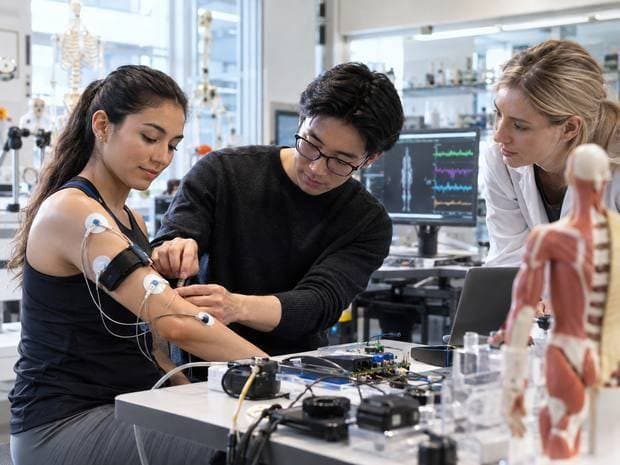
Device design, verification, clinical evaluation and the evidence a device has to carry before it reaches a patient.
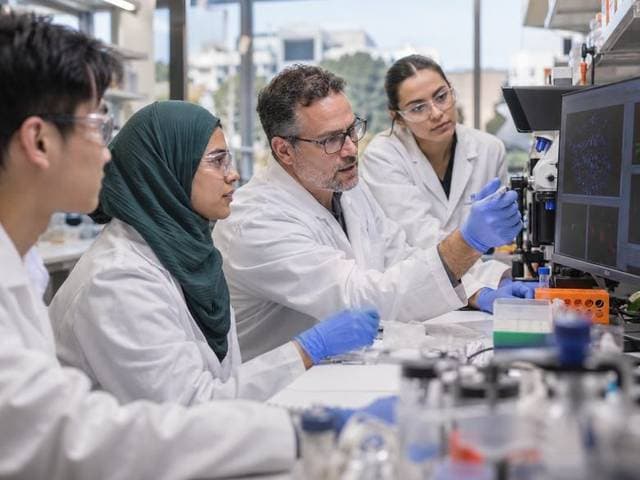
Site monitoring, data that does not add up, protocol deviations and the reports those problems demand.
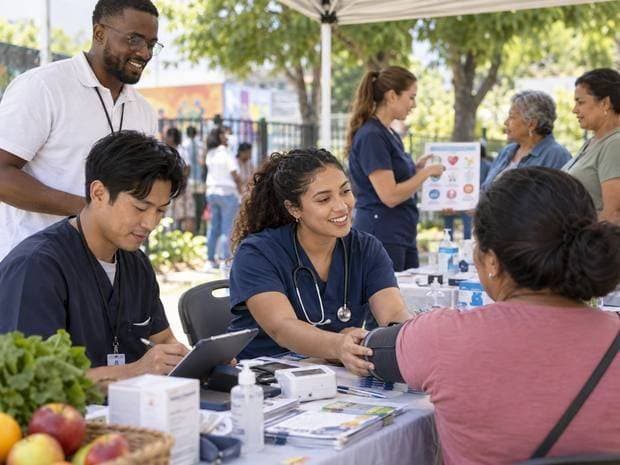
Screening programmes, outbreak response and health promotion — decisions made at population level.
Also built on request: Nursing, Medical Imaging & Diagnostics, Allied Health & Rehabilitation, Bioinformatics and Food Science & Nutrition. Pharmacy and pharmaceutical sciences run as Pharma 4.0.
Tell us the discipline, the year group and the roles your graduates are hired into. We will come back with the desks and the structure we would recommend.
+61 434 421 008 · ceo@gonexsphere.com
Experiences are built around the roles a discipline hires into, so those details shape the answer.